
The integration of Artificial Intelligence (AI) in healthcare represents one of the most significant technological revolutions of our time. This breakthrough promises to transform how we approach patient care, diagnostics, and medical research. I’m Pawyica Woname, a freelance Project Manager and Consultant with extensive experience in managing Healthcare IT projects. I’ve witnessed firsthand the profound impact and the complexities that come with embedding AI into healthcare systems.
This blog post delves into the dual aspects of this integration – the challenges and the opportunities. We’ll explore the technical, ethical, and operational hurdles that healthcare organizations face. We’ll also highlight the immense potential AI holds in revolutionizing patient outcomes and healthcare efficiency.
My aim is to provide a balanced perspective, drawing from experiences managing healthcare IT projects. I want to help key stakeholders like you navigate this exciting yet intricate landscape. Integrating AI in healthcare is both challenging and rewarding. Understanding both sides of this coin is crucial for anyone involved in this field.
The Landscape of AI in Healthcare
Artificial Intelligence (AI) has emerged as a cornerstone of innovation within the realm of healthcare. This has significantly altered medical care delivery and the patient experience. The applications of AI in this field are diverse and far-reaching. For instance, AI-powered diagnostic tools are revolutionizing early disease detection, as reported in a study by Nature Medicine. This highlights AI’s accuracy in diagnosing diseases like cancer from imaging scans. Similarly, AI’s role in patient care is exemplified through advanced algorithms that personalize treatment plans. This concept was explored in depth by the New England Journal of Medicine.
Moreover, the integration of AI extends into medical research and drug discovery, where AI algorithms accelerate new pharmaceuticals and therapies. The impact of AI extends beyond direct patient care to administrative efficiency. According to one source, AI in healthcare administration could save up to $360 Billion by automating tasks and optimizing workflows.
These varied applications underscore AI’s transformative potential in healthcare. However, this transformation is not without challenges. As AI continues to evolve, healthcare systems must adapt to integrate these advanced technologies effectively and ethically, a task that requires careful management and foresight.
The landscape of AI in healthcare is marked by groundbreaking advancements and promising potential. These benefits will redefine the boundaries of medical care and research. As this field evolves, it’s crucial to stay informed and adapt, ensuring that AI’s integration into healthcare maximizes benefits while navigating its inherent complexities.
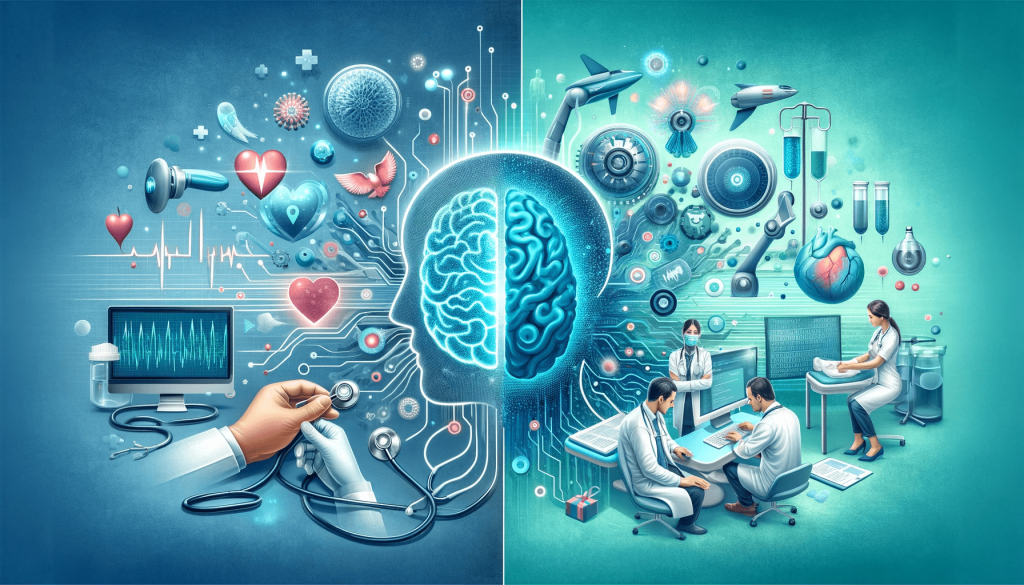
Challenges of AI Integration in Healthcare
The integration of Artificial Intelligence (AI) in healthcare, while promising, presents a myriad of challenges that must be navigated with precision and foresight. One of the main technical challenges is the quality and consistency of data. AI systems require large volumes of high-quality data to learn and make accurate predictions. Achieving consistency in healthcare (where data is often fragmented across different systems), poses a significant hurdle.
Interoperability
Interoperability, or the ability of different systems and software applications to communicate and exchange data effectively, is another technical barrier. Legacy systems are common in the healthcare industry. These systems are not designed for seamless integration with modern AI technologies. Which, in turn, leads to significant obstacles in data sharing and system compatibility.
Ethical Concerns
Ethical concerns also loom large in the realm of AI in healthcare. Issues surrounding patient consent, privacy, and the security of sensitive health data are critical. There’s a constant need to balance the innovative use of AI with the ethical implications of data use and patient rights. Furthermore, the potential for bias in AI algorithms, which can arise from skewed data sets or flawed programming, poses a risk of unequal care or misdiagnoses.
Resistance to Change
Another significant challenge is the resistance to change within the healthcare industry. Many healthcare professionals may be hesitant to adopt AI solutions, fearing a loss of control or questioning the reliability of AI-driven decisions. This resistance can be a major roadblock to the successful implementation of AI technologies.
From a project management perspective, these challenges are compounded by the need to manage complex, multidisciplinary teams, ensure regulatory compliance, and navigate the intricacies of integrating advanced technologies into established healthcare practices. AI integration in healthcare is not just a technological undertaking but a complex change management exercise, requiring a deep understanding of both the technology and the unique dynamics of the healthcare environment.
Opportunities Presented by AI in Healthcare
The integration of Artificial Intelligence (AI) into healthcare opens a panorama of opportunities that can reshape the industry. At the forefront is the enhancement of patient care. AI-driven diagnostics and treatment plans offer a new level of personalization and accuracy. With AI, medical professionals can identify diseases earlier and with greater precision, leading to more effective treatments and improved patient outcomes.
Operational Efficiency
Another significant opportunity presented by AI is operational efficiency. In a sector where resource allocation and cost management are critical, AI can streamline operations, reduce redundancies, and optimize resource utilization. For instance, AI-powered systems can automate administrative tasks such as appointment scheduling, patient data management, and billing processes. This not only saves time and costs but also allows healthcare providers to focus more on patient care.
In the realm of innovation and research, AI acts as a catalyst. It accelerates the pace of medical research by analyzing vast datasets, identifying patterns, and generating insights at a speed and scale unattainable by human researchers. This capability is especially vital in drug discovery and epidemiological studies, where AI can predict drug efficacy and model disease spread, respectively.
Project Management
From a project management perspective, AI integration offers a wealth of opportunities. Project managers in healthcare IT can lead the way in implementing AI solutions that improve patient care and operational efficiency. They play a crucial role in managing the transition, ensuring that AI tools are integrated smoothly into existing healthcare systems and workflows. By doing so, they not only contribute to the advancement of healthcare technology but also help in establishing new standards and best practices in healthcare IT.
Overall, the integration of AI in healthcare is not just an opportunity to improve existing processes and outcomes; it’s a leap towards a future where healthcare is more efficient, effective, and personalized. This transformative potential of AI makes it an invaluable asset in the ongoing evolution of the healthcare industry.
Navigating the Integration Process
Successfully integrating Artificial Intelligence (AI) into healthcare systems demands strategic planning and adept project management. A key aspect of this process is embracing best practices in AI project management. This involves clear goal setting, meticulous planning, and constant monitoring of progress. It’s crucial to define the scope of the AI project accurately, ensuring that it aligns with the overall objectives of the healthcare institution and addresses specific challenges or needs.
Collaboration is another critical component. Integrating AI in healthcare is a multidisciplinary endeavor that requires the combined expertise of healthcare professionals, IT specialists, data scientists, and ethical advisors. Effective communication and teamwork across these diverse groups are essential to navigate the complexities of AI projects.
Finally, future-proofing AI projects is of paramount importance. The healthcare sector is continuously evolving, and AI technologies are rapidly advancing. Project managers must ensure that AI solutions are scalable and adaptable to future technological advancements and changing healthcare needs. This foresight will help in maximizing the long-term benefits of AI in healthcare, ensuring that the implemented solutions remain relevant and effective in the face of ongoing changes and developments in the field.
Final Thoughts
In conclusion, the integration of AI into healthcare is a multifaceted journey, rich with challenges but even more abundant in opportunities. From enhancing patient care to revolutionizing operational efficiency and research, AI’s potential is vast. Yet, navigating its integration requires careful consideration of ethical, technical, and managerial aspects. As we embrace this transformative technology, it’s essential to approach it with a balanced perspective, understanding both its immense possibilities and the complexities involved. In doing so, we pave the way for a future where healthcare is more efficient, effective, and patient-centered.